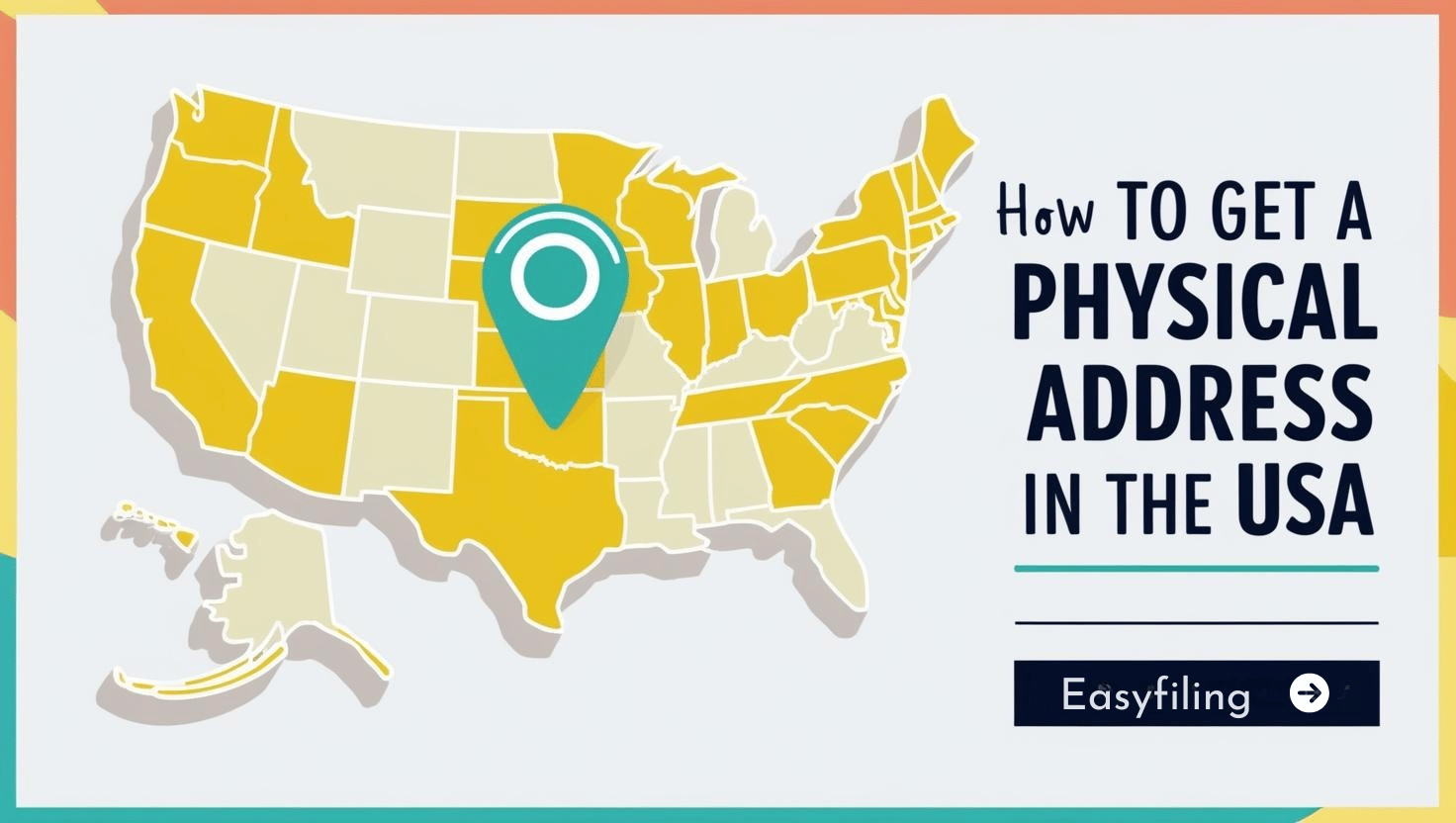
If you are an entrepreneur or digital nomad intending to start your business in the US, having a physical address is vital.
A US address can serve several purposes: business registration, tax handling, mail reception, and increasing your credibility with clients.
In this article, we will cover the various methods for obtaining a physical address in the USA, the advantages that come with it, and the best options that suit your particular needs.
Why You Need a Physical Address in the USA
A physical address in the United States can serve multiple purposes, including:
Business Formation: Most US states ask for a physical address when you register an LLC or corporation.
Mail Handling: An address that you can rely on ensures that essential business correspondence, legal notices, and tax documents are delivered to you.
Banking & Financial Services: As with most US banks, some require a physical address to initiate an account.
Professional Credibility: With a US business address, you will build trust and project professionalism with customers and partners.
Compliance with US Regulations: Businesses in certain industries must have a US-based address to comply with local laws.
1. Renting a Physical Office Space
If you are looking for a place to work, renting an office might be a good fit. This is suitable for businesses that require a local presence and a meeting space for clients. Consider this list:
Commercial Office Rentals: Signing a business contract for office space located in a business area for a certain time, like a year or two.
Coworking Spaces: Flexible office spaces and business hubs with high-speed internet, meeting rooms, and business development opportunities.
For entrepreneurs seeking a professional workplace while maintaining flexibility, shared office space for New York professionals can offer access to equipped work areas and meeting facilities without the long-term commitment of a traditional office lease
Executive Suites: These suites come with furniture and essential business supplies, plus secretarial services, reception, help with sorting mail, and conference rooms.
Pros:
- Increase your credibility and professional image.
- Gives access to the appropriate work environment.
- Perfect for client meetings and networking for business growth.
Cons:
- Costs for rent, repairs, and facilities are very high.
- Not suitable for sole entrepreneurs or smaller start-ups.
- Exposes one to a long-term lease commitment, which sometimes comes with unsavory contracts or agreements.
2. Using a Virtual Office
Virtual offices provide a space without office furniture, while still maintaining a physical building for business registration and mail handling.
Companies like Regus, Opus Virtual Offices, and Davinci are offering such services. These services generally include a business address and answering services, and they may also lease out office space, such as a meeting room, for a fee.
Pros:
- Considerably less expensive than renting physical space, yet still offers a branded image.
- Handles all mail and forwarding for clients operating internationally.
- Some of them include receptionist services, call answering, and use of the business lounge.
- Enables businesses to create multiple U.S. addresses across various locations.
Cons:
- Limited access to the address itself unless reserving a meeting room.
- Mail forwarding, scanning, and phone answering services all incur an additional cost.
- Not ideal for businesses seeking a permanent physical office.
3. Getting a Digital Mailbox

Individuals and businesses can use online mailbox services to receive mail at an address in Florida or elsewhere in the U.S. and view it online!
Services like EasyFiling, Anytime Mailbox, and iPostal1 are well known in the niche. These companies scan and upload the mail so it can be viewed and managed from virtually anywhere, eliminating the need for a U.S. presence.
Pros:
- Makes it accessible to international businesses with no geographical limitations.
- Provides services such as mail scanning, forwarding, and check deposit for added convenience.
- A cheaper option than renting an office or employing a registered agent.
- Helps mitigate the risk of losing mail and having packages stolen by providing safe storage.
Cons:
- Some banks and other financial institutions do not accept addresses from digital mailboxes for account verification.
- Physical office and meeting space for in-person business interactions is not available.
- Several other bulk shipments need to be handled by forwarding, and extra charges to the mail are required.
4. Using a Registered Agent Address
If you plan on creating an LLC or corporation within the United States, you will require a registered agent service to handle legal matters on behalf of your company.
A handful of registered agent services offer the option to obtain a physical business location. This works well for people who reside outside the U.S. and want to comply with U.S. laws.
Pros:
- It is a prerequisite when setting up an LLC or corporation to meet the state compliance requirements.
- Supplies a business address for receiving legal documents and other official communications.
- Usually comes with the optional mail forwarding and scanning services.
- Can be used in different states depending on the business growth plan.
Cons:
- Usually, this stems from the restriction to receiving only legal notices, not business mail or correspondence.
- It is not an actual office and, therefore, cannot be used for client meetings or regular business activities.
- Some local jurisdictions may require a separate business address in addition to the agent’s registered office address.
5. Renting a PO Box or USPS Street Address
Renting a P.O. Box with the United States Postal Service is the most affordable option to receive correspondence within the United States.
To access a broader range of services, you can also purchase a street address with the P.O. Box for premium address service, which allows packages to be sent via carriers such as FedEx and UPS.
Pros:
- The product is cost-effective and widely accepted for both personal and business communication.
- The mailbox is kept secure, and USPS can be accessed at any time.
- Some USPS branches allow the use of a business address, which is more professional than a P.O. Box number.
- Perfect for micro-businesses that do not operate from a physical location but need a stable mailing address.
Cons:
- Some states that require business registration do not allow USPS addresses for registration when a street address is required.
- For an LLC or a corporation, the box cannot be used as a legal address.
- P.O. addresses are prohibited for some banks, agencies, and other service providers to use for verification of a client’s address.
6. Using a Friend or Family Member’s Address
Trusted contacts in the US can also serve as an address for business and mail purposes.
With this process, setting up a business or managing tasks from abroad is uncomplicated because a US address is only required temporarily.
Pros:
- No additional services or charges, so it is free or very low cost.
- Gives people a physical residential or business address valid across many platforms.
- Helpful for people who need to receive official letters, tax documents, or business documents.
Cons:
- For people operating long-term businesses, this is not ideal, as it depends on someone’s discretion in managing the mail.
- There may be legal issues regarding the use of the address for business purposes or tax purposes.
- It can inconvenience the person helping you, especially when there is a high volume of mail.
How to Choose the Right Option
When looking for a physical address in the USA, make sure to think of these:
Address Purpose: Is it for business registration, mail handling, tax filing, or credibility?
Budget: What are the associated costs, and can you afford them in the long term?
Legal Requirements: Does it comply with the state laws and federal regulations for your business or entity type?
Physical Access: Do you require a place you can frequent, or is a remote solution ok?
Mail and Package Services: Is it simply forwarding, scanning, or do you require package reception?
Scalability: If the business expands, will that address still be ideal or suitable?
Conclusion
Deciding on the most suitable approach to obtaining a physical address in the USA will largely depend on your goals. When you need to provide a business address but do not want to run an office, a virtual office or a digital mailbox will suit you best.
Using a registered agent service for business formation should suffice. Defining the purpose of your U.S. address will determine your best options.
For stress-free solutions to business addresses, try EasyFiling’s digital mailbox and virtual office solutions. Start today and build your U.S. presence in minutes!
Frequently Asked Questions (FAQs)
Can a virtual office be used to set up an LLC?
Most states allow the use of a virtual office for LLC registration, but some do mandate a physical street address.
Can a P.O. Box be used as a business address?
As with other questions, the answer is typically no for LLC or corporation registration in most states. However, the USPS street address option is a viable alternative.
Can a non-American citizen have a U.S. address?
Certainly, via digital mailboxes, registered agent services, or virtual offices.
What is the cheapest way to get a U.S. address?
Using a friend’s address or a digital mailbox service is often the most affordable option.
Do banks accept virtual office addresses?
Some banks accept them, but others may require a real physical address for verification.
“This content is for informational purposes only and does not constitute legal, tax, or financial advice. For advice specific to your situation, consult a qualified US attorney or CPA.”
File Your LLC Today
25$ off with a coupon
Lock in EasyFiling's transparent rates and get lifetime compliance support at no extra cost.
Get Started Now
Swostika Silwal