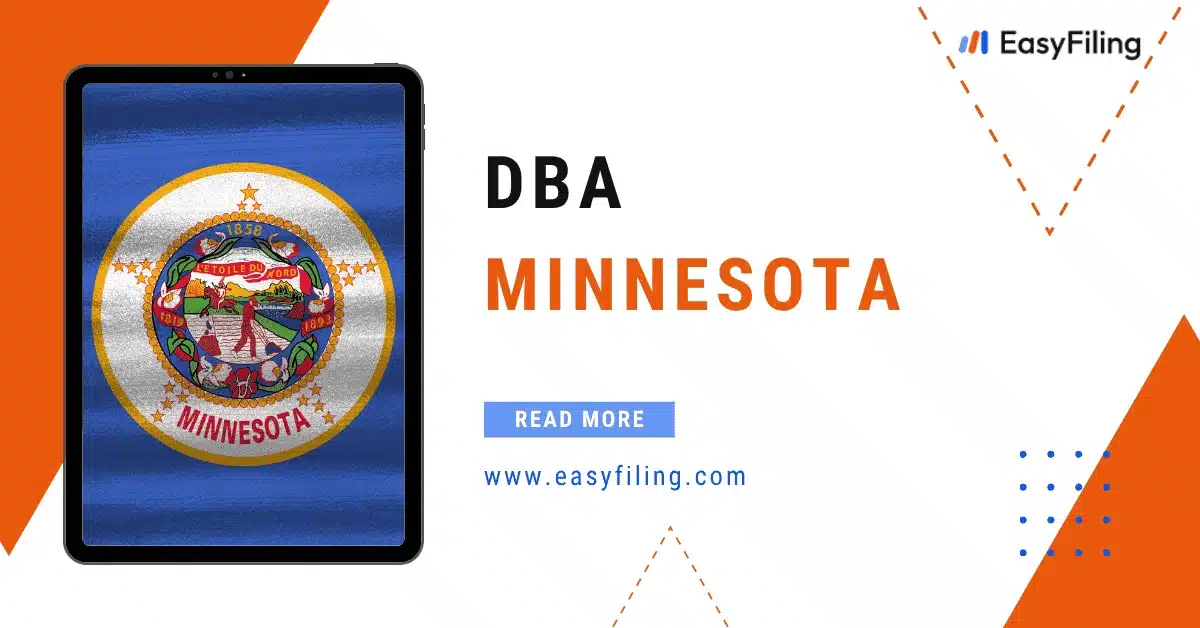
If you want to run your business under a trade name, you need to understand how DBA registration in Minnesota works. As of January 2026, Minnesota state law requires most businesses operating under a name other than their legal name to formally register what the state officially calls an “Assumed Name.” Whether you are a sole proprietor, a partnership, or an LLC looking to rebrand, this complete guide covers every step from naming rules to renewal deadlines, so you stay compliant and move forward with confidence.
What Does “Doing Business As” Actually Mean in Minnesota?
Before filing, understand what a DBA is and what it is not:
- A DBA is not a separate legal business entity
- It does not provide personal liability protection
- It does not function as a trademark or grant name exclusivity
- It is simply a registered trade name that lets you operate and collect payments under a chosen name
- Minnesota officially uses the term “Assumed Name” rather than DBA
Important: Registering a DBA in Minnesota does not stop another business from registering the same assumed name. For brand exclusivity, consider a federal trademark through the USPTO.
What Makes Minnesota DBA Registration Unique?
Here is what sets DBA Minnesota apart from other states:
| Feature | Details |
|---|---|
| Registration required | Yes, mandated by Minnesota state law |
| Registration exceptions | Some licensed professionals may be exempt |
| Annual renewal | Yes, mandatory every year |
| Publication requirement | Yes, must publish in a qualifying legal newspaper |
| Name exclusivity | No, another business can use the same assumed name |
Who Needs a DBA in Minnesota?
You need to register a DBA in Minnesota if you are:
- A sole proprietor operating under any name other than your own legal name
- A general partnership using a trade or business name
- An LLC or corporation marketing or selling under a different brand name
- An existing business expanding into a new market or rebranding
Top Reasons to Get a DBA in Minnesota
- Operate legally and professionally under a trade or brand name
- Rebrand or launch a new product line without forming a new entity
- Build a strong public-facing brand image
- Open a dedicated business bank account under your trade name
- Accept payments and sign contracts using your DBA name
Minnesota DBA Naming Rules: What You Can and Can’t Use
Minnesota enforces specific naming restrictions you must follow before filing:
Prohibited or restricted names include:
- Names implying government affiliation, such as “Federal” or “National,” without approval
- Names identical or deceptively similar to an already registered business
- Names suggesting a licensed profession like “Bank” or “Insurance” without proper licensing
Tips for choosing a compliant name:
- Run a name availability search before committing
- Avoid words that could mislead consumers about your business authority
- Conduct a separate USPTO search if trademark protection is a priority
How to Register a DBA in Minnesota: Step-by-Step
Step 1: Search name availability: Use the Minnesota Secretary of State’s online business name search tool to verify your name is not already taken.
Step 2: Confirm naming compliance: Make sure your chosen name complies with all Minnesota assumed-name rules.
Step 3: Determine where to file: Identify whether you file at the county level or with the Minnesota Secretary of State based on your business structure.
Step 4: Complete the Certificate of Assumed Name: Fill out the correct form for your filing level, state, or county.
Step 5: Pay the filing fee: Submit payment with your completed form.
Step 6: Publish your certificate in a legal newspaper: Minnesota law requires publication in a qualifying legal newspaper after filing.
Step 7: Retain proof of publication: Keep your affidavit of publication on file as proof of compliance.
Where to File Your Minnesota DBA: County vs. State Filing
Filing at the wrong level is one of the most common and costly mistakes in DBA registration in Minnesota.
| Business Type | Where to File |
|---|---|
| Sole proprietors | County where the business is located |
| General partnerships | County where the business is located |
| LLCs | Minnesota Secretary of State |
| Corporations | Minnesota Secretary of State |
Major county filing offices include Hennepin, Ramsey, Dakota, Anoka, and Washington counties. Always confirm the specific process with your local county office, as procedures vary.
Minnesota DBA Forms: What You Need to File
- State filers (LLCs and corporations): Certificate of Assumed Name available at sos.state.mn.us
- County filers (sole proprietors and partnerships): County-specific assumed name form available from your local county recorder’s office
- Have ready: Your EIN or Social Security Number and your full business address
Minnesota DBA Filing Fees and Processing Times
| Filing Method | Fee | Processing Time |
|---|---|---|
| Online Secretary of State | $30 | Same business day |
| Mail Secretary of State | $30 | 5–7 business days |
| County filing | Varies by county | Varies by county |
| Legal newspaper publication | $50–$200 estimate | Required after filing |
Estimated total cost: $80–$250 depending on your county and newspaper publication rate.
Minnesota DBA Publication Requirement: What You Must Do After Filing
Minnesota’s publication requirement is one of the most overlooked steps in the entire process:
- The newspaper must be officially designated as a legal newspaper under Minnesota law
- Publication is required once per week for two consecutive weeks
- Publication must be in the county where your principal place of business is located
- You will receive an affidavit of publication. Keep this document permanently
- Skipping this step can result in your registration being considered non-compliant
Tax Considerations for Your Minnesota DBA
- A DBA does not change your federal or Minnesota state tax structure
- You do not need a separate EIN solely for a DBA
- Sole proprietors report all DBA income on their personal return using Schedule C
- LLCs with a DBA continue to be taxed according to their original entity election
- Register for a Minnesota sales tax permit if selling taxable goods or services
- Always consult a licensed tax professional for advice specific to your situation
How to Renew Your Minnesota DBA
- Renewal is due every year from your original registration date
- State filers renew through the Minnesota Secretary of State website
- County filers renew through their county office
- Missing the deadline may cause your assumed name to lapse
- Set a calendar reminder 60 days before your renewal date to avoid any compliance gap
How to Amend or Cancel a Minnesota DBA
To amend: File an amendment form with the Secretary of State or your county office if your address, ownership, or name details change.
To cancel: File a cancellation form at the same level where you originally registered. Once processed, your assumed name will no longer be active.
You can legally sign contracts under your DBA name as long as it remains active and registered.
DBA vs. LLC in Minnesota: Which Is Right for Your Business?
| Factor | DBA | LLC |
|---|---|---|
| Liability protection | None | Yes — personal assets protected |
| Formation cost | $30+ | $155+ |
| Separate legal entity | No | Yes |
| Name exclusivity | No | Yes |
| Best for | Sole props, rebrands | Growing businesses need protection |
Common Mistakes to Avoid When Filing a DBA in Minnesota
- Filing at the wrong level: county vs. state
- Choosing a name that violates Minnesota naming rules
- Skipping the publication requirement after filing
- Forgetting the annual renewal deadline
- Assuming a DBA protects your name like a trademark
- Not updating your DBA after an address or ownership change
- Confusing a DBA registration with a business license
Key Takeaways: Everything You Need to Know About DBA Minnesota
- Minnesota officially calls DBAs “Assumed Names”; registration is required by law
- Sole proprietors and partnerships file at the county level; LLCs and corporations file with the Secretary of State
- Annual renewal is mandatory; a lapsed registration puts your business out of compliance
- Publication in a legal newspaper is required after filing; this is not optional
- A DBA does not provide liability protection or trademark rights
- Filing fees start at $30; total costs, including publication, range from $80 to $250
- You do not need a separate EIN for a DBA
- A DBA and a business license are two completely separate requirements
Minnesota DBA FAQs
How much does it cost to register a DBA in Minnesota?
State filing is $30. Adding county fees and newspaper publication, total costs typically range from $80 to $250.
Do I need a separate EIN for my DBA?
No. A DBA does not create a new legal entity, so you use your existing EIN or Social Security Number.
How long does a Minnesota DBA registration last?
One year. You must renew annually to keep your assumed name active.
Can two businesses use the same DBA name in Minnesota?
Yes. Minnesota does not grant name exclusivity through assumed name registration.
Can I sign contracts under my DBA name?
Yes. Once registered, you can legally sign contracts and conduct business under your assumed name.
What happens if I do not renew my DBA on time?
Your assumed name registration may lapse, meaning you are no longer legally authorized to operate under that name until you re-register.
Ready to register your DBA in Minnesota without the paperwork hassle? EasyFiling simplifies the entire process from name search to submission, so you can focus on growing your business. Get started with EasyFiling today.
“This content is for informational purposes only and does not constitute legal, tax, or financial advice. For advice specific to your situation, consult a qualified US attorney or CPA.”
File Your LLC Today
25$ off with a coupon
Lock in EasyFiling's transparent rates and get lifetime compliance support at no extra cost.
Get Started Now
Swostika Silwal