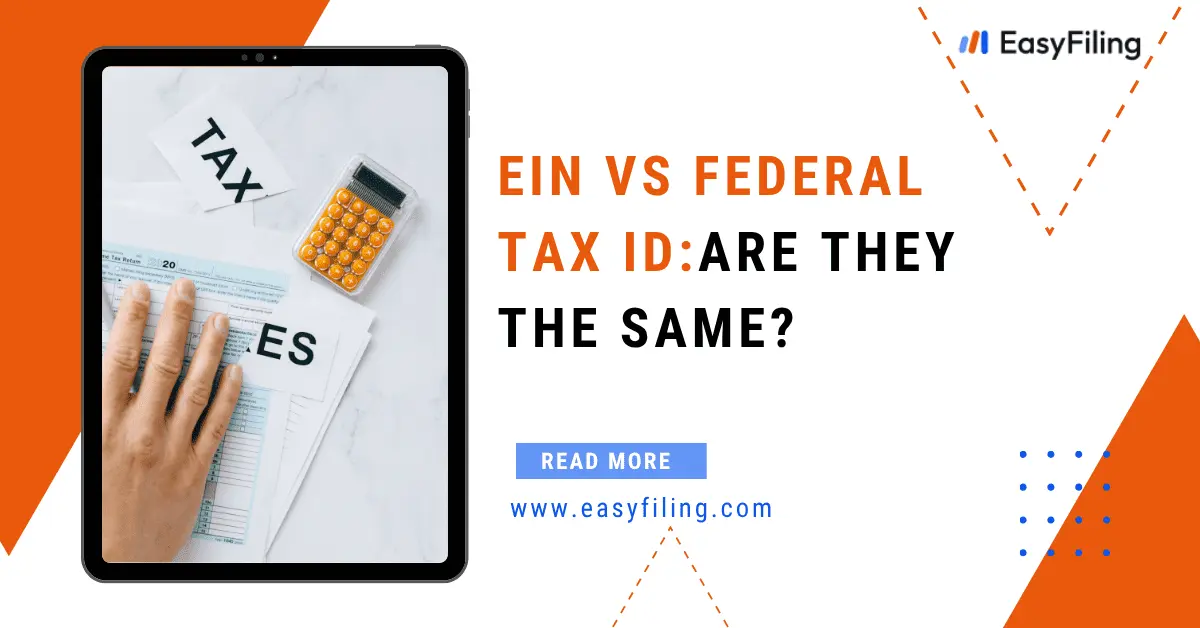
An EIN and a Federal Tax ID are simply two ways of referring to the same number. The IRS refers to these nine-digit business numbers as follows. There is a misunderstanding when people think they are filing for two separate numbers, or think that an EIN is the same as a state tax ID number. The EIN vs Federal Tax ID confusion almost always comes down to naming, not filing requirements. That number was issued by a separate agency and is entirely different.
Understanding Tax Identification Numbers in the U.S.
In the early 70s, to track the tax obligations of employed individuals, the IRS began assigning EINs. Federal Tax ID is the name that stuck, as this ID number appeared in bank forms, contracts, and government procurement forms.
In a W-9, one is asked to provide their Taxpayer Identification Number (TIN). The TIN for a business is its EIN, and for individuals, it is their SSN. In this case, TIN is the umbrella term and is also another name for the same number.
What Is an Employer Identification Number (EIN)?
EINs are assigned when an application (Form SS-4) is submitted to the IRS. The format is always a nine-digit number assigned to a specific business entity, designated XX-XXXXXXX. Business structures such as sole proprietorships, LLCs, corporations, partnerships, trusts, estates, and nonprofits can all be assigned an EIN.
You don’t need employees to apply for an EIN. While it is called an Employer Identification Number, the term is actually more confusing for founders. Many think they can only apply once they hire employees. This is incorrect since banks and payment processors require it for business accounts. Foreign founders who are establishing a U.S. LLC will need an ITIN for tax applications, tax filing, and wire transfers from U.S. clients.
What Is a Federal Tax ID?
A Federal Tax ID is not its own number. It is the more common name for an EIN, outside of the IRS. You will see it in business forms, vendor forms, W-9s, 1099s, and government contracts. While some businesses use the term Federal Tax ID, others prefer EIN. In both cases, they refer to the same number.
The most common issue occurs when founders see both terms and assume they need to apply for two distinct numbers. This is incorrect.
EIN vs Federal Tax ID: Are They the Same Thing?
Yes. In most instances, the confusion comes from three areas.
Number one, state taxes. In California, for example, businesses can receive a CA Secretary of State number and an FTB number. In Texas, businesses receive a state taxpayer number. These are not EINs and are not the IRS’s concern.
Number two, the W-9 form asks for a Taxpayer Identification Number (TIN). For businesses, TIN is the equivalent of an EIN. For individuals, TIN is their SSN. The IRS uses TIN as a generic term, so a naming overlap appears again.
Number three: in some industries, the EIN is referred to as the “Federal Tax ID” on vendor registration forms, 1099s, and procurement contracts. In other industries, only an EIN is used. This creates confusion and leads founders to believe they must obtain two separate numbers. This is a misconception.
Key Differences Between EIN and Federal Tax ID
| EIN / Federal Tax ID | State Tax ID | |
| Issued by | IRS (federal) | State revenue/tax agency |
| Purpose | Federal taxes, banking, payroll | State income tax, sales tax, state payroll |
| Required for all businesses? | Effectively yes | Depends on the state and the activity |
| Same across states? | Yes, one per entity | No, each state issues separately |
| Forms involved | SS-4 | Varies by state |
For example, if you register an LLC in Wyoming but do business in California, you may need to file as a foreign entity in California, pay California taxes, and obtain a registered agent in California. But this process has no effect on your EIN. Your EIN is the same no matter where in the U.S. you conduct business.
Who Needs an EIN?
The IRS requires businesses to obtain an EIN if they:
- Have employees
- Pay certain excise taxes.
- Operate as a partnership or corporation.
- Have a Keogh plan
- Deal with trusts, estates, or nonprofit organizations
Most registered businesses should have one. LLCs without EINs have difficulties with banking, vendor billing, and meeting state filing requirements.
Single-member LLCs acting as disregarded entities with no employees and no excise tax burden can use the owner’s SSN. This can be problematic. Banks require an EIN for your business, and if you are a foreign founder without a Social Security number, you will need to obtain an EIN rather than mix your tax identifiers.
The EIN is free to obtain and is yours to keep. Do not neglect to use it completely, or you may need to pay government fees to reactivate it.
Can Non-U.S. Residents Obtain an EIN?
Yes, but it’s a slightly different process. If you set up an LLC in the U.S. and do not have a Social Security Number (SSN) or Individual Taxpayer Identification Number (ITIN), you cannot use the online system. You need to submit Form SS-4 via mail or fax, or work with a U.S.-based third-party designee.
As of mid-2025, the IRS takes four to six weeks to process faxes and eight to ten weeks to process mail. EasyFiling acts as a third-party designee for non-resident founders. This eliminates the IRS phone queue, fax logistics, and the hassle of rejected forms.
How to Apply for an EIN
Online (fastest, U.S.-based applicants only)
The IRS has an online system that issues EINs immediately. You must complete the application within 15 minutes; otherwise, it will time out, and you will not be able to save your progress. Therefore, it is recommended that you gather all required information prior to starting the application. Required information includes the entity’s legal name, the SSN or ITIN of the responsible party, the address of the business, and the type of business entity.
The responsible party must be an individual with an SSN or ITIN located in the U.S. Non-resident founders cannot use this portal.
Fax (Form SS-4)
You can fax Form SS-4 to the IRS. Processing time is four to six weeks. The IRS will return the EIN to the fax number provided on the form. Line 7b must be completed accurately. The most common reason for application return is incomplete or incorrect information in that field.
The mail option uses the same form, but the wait time is longer. The current processing time is eight to ten weeks. Use this option only if it’s your only choice.
Third-party designee
Line 18 of Form SS-4 gives you the option to appoint a third-party designee to receive the EIN on your behalf. We commonly use this option for non-resident founders. This requires the designee’s name, phone number, and address. The IRS will issue the EIN to the designee, who then sends it to the applicant.
Don’t want to deal with the IRS for the EIN? EasyFiling prepares and submits the SS-4 application for you, serves as your third-party designee, and sends you the EIN when it is issued.
See how our EIN service works.
Common Mistakes and Misconceptions About EINs and Federal Tax IDs
Designating the LLC as the responsible party. This must be an individual. If you place the LLC name and skip the SSN or ITIN, your application will be returned.
Applying before the entity is established. The application must be filed after the LLC is formed and the Articles of Organization are approved. The IRS needs the entity name exactly as it appears in the formation documents.
Continuing the use of an existing EIN after a structural change. A change from a sole proprietorship to an LLC, or changes in LLC membership, are structural changes that may require a new EIN. The IRS has specific guidelines about the validity of an existing EIN and when a new one is required.
Not retaining the CP-575 notice. This confirmation letter, sent by the IRS upon EIN issuance, is the only official proof of an EIN and is specifically requested by banks, government agencies, and larger contractors. If lost, a 147C letter may be requested, but this requires waiting 30 minutes or more on the IRS Business and Specialty Tax Line.
Assuming one EIN covers multiple LLCs. Each LLC must apply for and be assigned its own EIN. The EIN from one LLC cannot be used for another LLC formed later.
Frequently Asked Questions About EIN vs Federal Tax ID
Is an EIN the same as a Federal Tax ID?
Yes, they are the same number, issued by the IRS. These numbers are nine digits. Both terms appear on bank forms, vendor agreements, and government documents.
Can foreign nationals apply for an EIN?
Yes, but they cannot use the IRS online portal. Foreign nationals who do not have an SSN or ITIN must apply via fax using Form SS-4, by mail, or through a third-party designee. A faxed application will be processed in four to six weeks.
When do I need a new EIN?
You will not need a new EIN for a business name change. You notify the IRS by checking the name change box on your tax return or by sending a signed letter to the IRS. A new EIN is required when there is a change in the type of business entity or ownership structure, or when the business undergoes certain conversions.
How long does it take to get an EIN?
If you are based in the U.S. and apply online, you get your EIN immediately. As of mid-2025, fax applications take four to six weeks. Mail applications take eight to ten weeks.
How to Apply for an EIN: Get It Done Today
The process is free and can be completed by individual business owners. If you are a U.S. resident with a Social Security number, you can get your EIN in a few minutes on the IRS website and receive it the same day.
For founders who are not U.S. residents, don’t have an SSN or ITIN, or just want to ensure it’s done right, we handle it for you. EasyFiling completes Form SS-4, files it with the IRS as a third-party designee, and sends you your EIN once it’s issued. No faxing required on your end.
“This content is for informational purposes only and does not constitute legal, tax, or financial advice. For advice specific to your situation, consult a qualified US attorney or CPA.”
File Your LLC Today
25$ off with a coupon
Lock in EasyFiling's transparent rates and get lifetime compliance support at no extra cost.
Get Started Now
Swostika Silwal