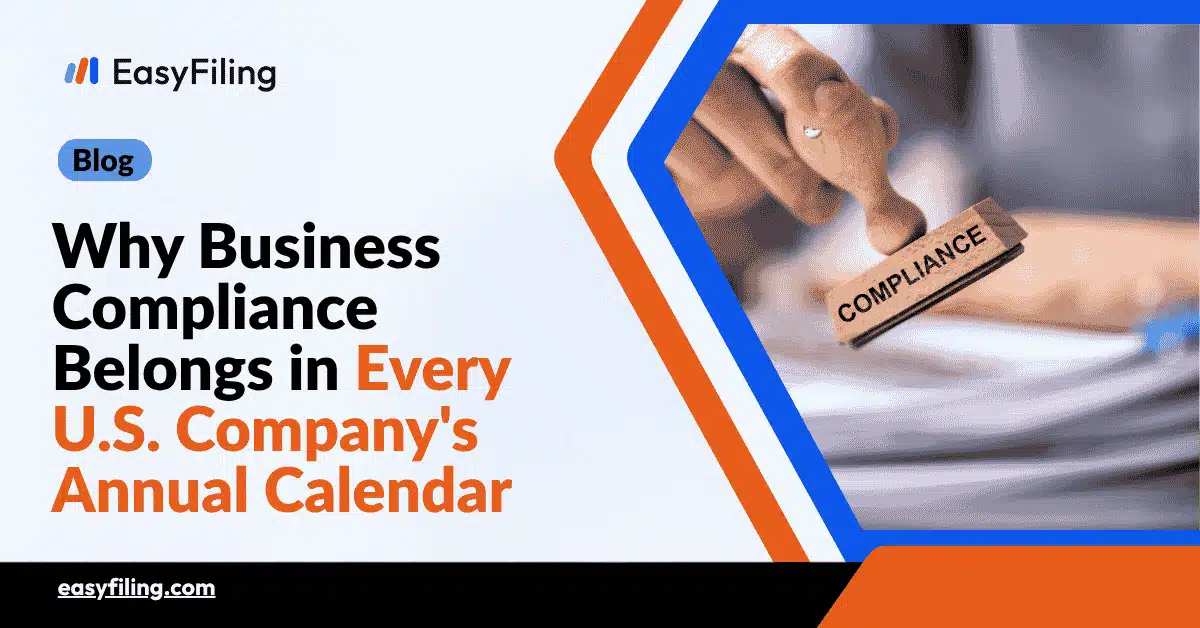
Creating a business in the United States is an exciting opportunity for many entrepreneurs. After choosing a business structure and official formation, many company founders start preparing to open and run their business. Unfortunately, this is just the beginning. Forming a company is only the first phase; it is only the start of a business owner’s management of legal and financial compliance, recordkeeping, and administrative tasks.
Missed deadlines, ignored legal obligations, and neglected fiscal responsibilities can all jeopardize a company’s existence and result in financial losses. Avoidable stress can be easily eliminated with an annual compliance calendar for U.S. businesses. The calendar is a record of basic administrative, fiscal, and legal tasks, including document renewals and corporate filings. With a calendar for recordkeeping, entrepreneurs remain focused on growing their business.
What Is a U.S. Business Compliance Calendar?
A business compliance calendar is an annual task list that centers on the business owner’s legal, administrative, and financial tasks. It includes deadlines for filing corporate documents, maintaining records, and complying with various fiscal and administrative requirements.
Compliance for a U.S. business depends on several factors, including the business structure, the state in which it was formed, the nature of the business, and the business owner’s obligations regarding corporate income tax. For instance, an LLC formed in Delaware has different obligations than a corporation formed in California. A business with employees or operations outside of one state will also have additional obligations.
A sample compliance calendar may include the following deadlines:
- Annual report due date.
- Federal and state income tax filing due dates.
- Deadlines to respond to official or legal correspondence sent to the company’s Registered Agent.
- Deadlines for renewal of business licenses and permits.
- Dates to update company or ownership records.
- Dates to review bookkeeping records.
- Dates to perform company or corporate governance duties.
Deadlines are not placed on a calendar merely as a reminder. Rather, a compliance calendar helps the business owner understand which tasks are required, when they need to be completed, and who is responsible for each.
As a business expands, investors, customers, or other partners may impose additional reporting obligations. This may even involve a company’s understanding of voluntary Environmental, Social, and Governance ESG reporting standards. Even though not all U.S. businesses will be affected by these requirements, organizing business records and reviewing legal obligations will better prepare a company to respond to any additional reporting requests.
Annual Report Filing: A Key Responsibility for LLCs and Corporations
Annual report filing may be the most important ongoing obligation for many businesses operating in the United States. This obligation varies depending on the state in which a business is organized and the type of business entity (corporation or LLC).
In most cases, a state’s filing requirement helps it maintain records of a business. The information captured by a state may include the business’s principal address, mailing address, managers, members, directors, or other information as designated by the state.
Business owners need to understand that LLC and corporation formation does not satisfy all of a business’s future state compliance obligations. Post-formation requirements do not cease, and filing deadlines may differ significantly from state to state.
For example, some states require annual reports, while others require only biennial reports. Some states or local jurisdictions may also impose state-level franchise taxes or other requirements. The due date may be based on the formation date, the filing date, or a calendar date.
Compliance calendars are effective for:
- Knowing which reports must be filed in each state.
- Knowing the filing due date for each state.
- Preparing the information required to complete the report(s).
- Providing reminders to file prior to the due date.
- Confirming that reports have been filed.
Filing annual reports on time is of the utmost importance to avoid late penalties. Failing to file may cause a business to lose its good standing and/or result in administrative dissolution. Owners should also understand that while some state compliance obligations may appear to be the same, they are not.
Tax Filing and Financial Recordkeeping
Tax compliance is essential to running a business on a day-to-day basis. Tax obligations vary by business type and personal situation, but at a minimum, businesses should have an accounting method to track income and expenses and organize supporting documents.
An LLC may file its taxes differently based on how it has elected to be taxed. Corporations may have a separate obligation to file a corporate tax return. Businesses operating in multiple states may also have obligations to pay income, sales, payroll, or other taxes.
Your business compliance calendar should include tasks for tax preparation and built-in deadlines. This encourages business owners not to wait until the last minute to gather documents or fill in missing data.
Significant financial documents may include:
- Records of your business income and sales.
- Your expense receipts and invoices.
- Your bank and credit card statements.
- Your payroll and contractor payment records.
- Your previous tax returns.
- Your sales tax records (if applicable).
- Records of your business asset purchases and depreciation.
- Your financial statements and reports from your bookkeeper.
These documents will help you prepare for tax filings and understand how your business is doing financially. Bookkeeping reviews should be done regularly, as they can help spot missing transactions, inaccurate categorization, or discrepancies. Your business accounts should also be organized to help you work with your tax professionals.
Registered Agent and Official Business Correspondence
A Registered Agent is a critical part of the compliance process for U.S. LLCs and corporations. There is typically a state requirement for a Registered Agent. The duties of a Registered Agent are to receive service of process and official state correspondence on behalf of the business.
The correspondence may include:
- Legal process.
- State process.
- Compliance process.
- Official business correspondence.
It is important to note that records must be updated in the state where the Registered Agent is located whenever there is a change of address or a change of Registered Agent. A compliance calendar helps organize and highlight filing deadlines and other important due dates. This helps you keep track of your Registered Agent and confirm that official communications are being documented appropriately.
For any U.S.-based business owner who is outside the U.S., a compliance calendar is important for receiving and tracking notices. However, having a Registered Agent does not relieve the business owner of the responsibility to keep the business in compliance, file reports, pay taxes, and respond to notices and communications.
Business Records Every Company Should Keep Organized
Proper business records are needed for compliance and to support a host of other inquiries and requests from banks, accountants, and government agencies. The best business records capture a business’s formation, ownership, and financing, as well as its operations.
Business formation documents
These may include:
- Articles of Organization for an LLC.
- Articles of Incorporation for a corporation.
- EIN confirmation documentation.
- Operating Agreement or corporate bylaws.
- Initial ownership and management records.
Company and governance records
Depending on the business structure, these may include:
- Member or shareholder information.
- Manager or director records.
- Ownership changes.
- Company resolutions and approvals.
- Important amendments to formation documents.
Financial and tax records
Businesses should also maintain:
- Tax returns.
- Financial statements.
- Bank statements.
- Expense documentation.
- Payroll records.
- Relevant state tax filings.
Compliance records
A well-organized company may also keep:
- Annual reports.
- State filing confirmations.
- Registered Agent correspondence.
- Business licenses and permits.
- Renewal records.
- Other important official notices.
Well-organized record systems help owners quickly know what has been filed and what has not, helping the business stay compliant.
Creating a Practical Annual Compliance Checklist
To create a useful annual compliance checklist, business owners need to develop a monthly task habit rather than waiting to do everything at once each year.
Monthly tasks
Review your bookkeeping records, receipts, and important documents. Consider whether any notifications or updates are necessary for the business.
Quarterly tasks
Review your financial, tax-related, and business records. Consider your data and the business records of your employees, contractors, or operations in multiple states.
Before you file
Review your filing requirements, as the business also needs to consider whether it must pay any fees along with the report.
Yearly tasks
Review your records, Registered Agent information, and required company records. Confirm that your reports and payments are in order.
When changes occur
Review new information regarding ownership, management, your business address, or your business activities. The point is to develop a habit of compliance for your business that is continuous rather than occasional.
Common Business Compliance Mistakes to Avoid
Even if you are an organized business owner, you can still miss important tasks. There are a few common mistakes that can easily disrupt your business.
Thinking you completed your obligations with business formation
Creating an LLC or corporation is just the first step; there can be ongoing licenses, reports, and taxes.
Not filing annual reports
Some business owners think the state will send a notification. Each business needs to track its own filing deadlines.
Ignoring Registered Agent notices
Official mail and correspondence should always be attended to. Ignoring notices could create avoidable problems.
Not keeping personal and business finances separate
Keeping personal and business records and transactions completely separate makes bookkeeping, financial reporting, and tax preparation much easier.
Last-minute tax preparation
Last-minute searches for receipts, invoices, and statements make tax preparation a lot harder.
Not updating business records
When a company has a new address, management, ownership, or other changes, the law may require that some or all business records be updated. Business owners should assess their legal requirements following any substantial changes to their business.
How EasyFiling Can Help With U.S. Business Compliance
Operating a business in the U.S. requires more than just filling out registration forms. Business owners may need help completing forms for compliance, financial reporting, and taxes.
The services provided by EasyFiling cover the entire process of owning and running a business in the U.S., from registration to the ongoing support a business may require. Relevant services include:
- U.S. LLC and C-Corp registration.
- Annual compliance filing.
- Registered Agent services.
- EIN services.
- Bookkeeping.
- Tax filing support.
Managing a U.S. business can be difficult for entrepreneurs, especially those who do not live in the U.S. The above services can help business owners meet their needs in organizing their obligations related to doing business in the U.S. However, entrepreneurs should research the obligations specific to their business, state, and tax situation to understand what they are required to do.
Conclusion: Stay Ahead of Business Compliance Deadlines
Compliance should not be a “tick-box” task done only when a deadline is about to be missed. For U.S. LLCs and corporations, running a business includes keeping accurate records, tracking annual reports, managing tax forms, and staying on top of official correspondence.
Managing these responsibilities becomes easy for business owners who follow a compliance calendar throughout the year. Businesses can eliminate stress and avoid unexpected obligations by regularly reviewing compliance requirements, preparing forms in advance, and keeping important records in order.
Creating consistent compliance habits brings lasting benefits, including smoother operations and overall business growth, for both newly established and long-standing companies. With the support of professionals who assist with business formation and compliance, business owners can manage their businesses with greater confidence as they continue to expand.
“This content is for informational purposes only and does not constitute legal, tax, or financial advice. For advice specific to your situation, consult a qualified US attorney or CPA.”
File Your LLC Today
25$ off with a coupon
Lock in EasyFiling's transparent rates and get lifetime compliance support at no extra cost.
Get Started Now
Swostika Silwal