Founders who build a company in the United States often pay into a system they only half understand. Payroll taxes are taken out of each paycheck. The Social Security line item adds up over the years. At some point, a practical question surfaces. What happens to a non-citizen partner once the worker retires, moves home, or passes away?
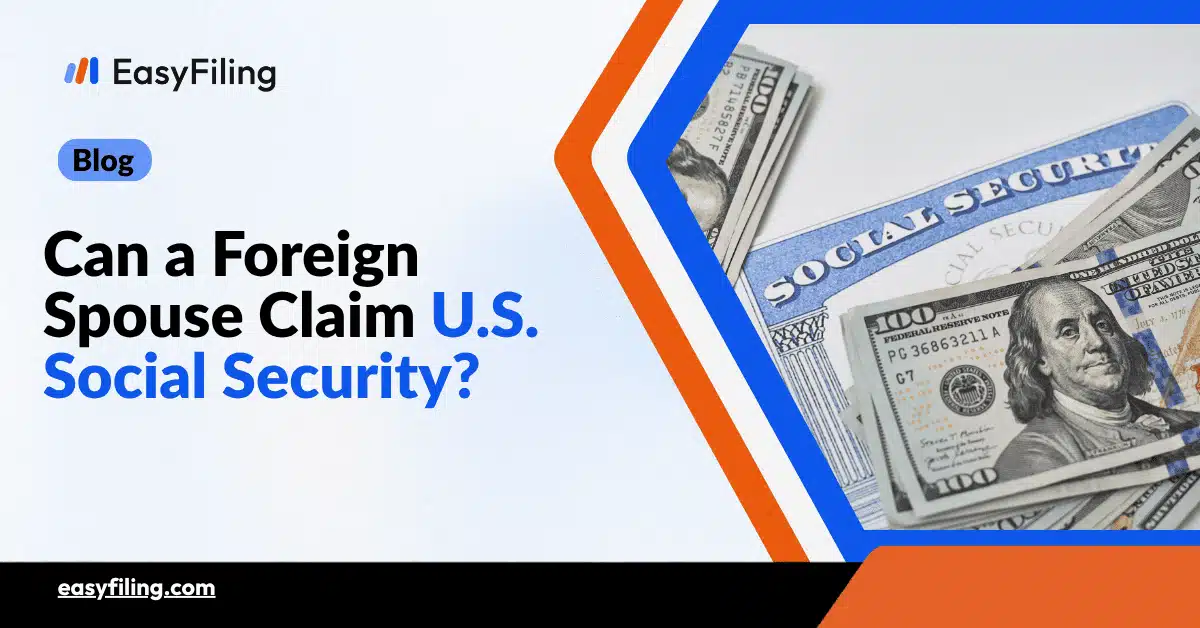
The short answer is that a non-U.S. spouse can qualify. The rules are tighter than they are for a citizen. Where the couple lives matters as much as how long the worker paid in. A clear explainer such as can a foreign spouse receive social security benefits is worth reading before any decision gets locked in.
This guide walks through the eligibility math, the residency traps, and the treaty rules behind the payments.
What Qualifies a Non-Citizen Spouse for Benefits?
A spousal benefit is a payment based on the work record of a husband or wife who earned U.S. Social Security credits. Eligibility hangs on the worker’s record, not the spouse’s citizenship.
The core conditions are consistent across most cases:
- The working spouse has earned at least 40 credits, roughly 10 years of covered employment.
- The non-citizen spouse is at least 62 or is caring for the worker’s child under 16 or with a disability.
- The couple has been married for at least one year, with limited exceptions for parents of a shared child.
- The spousal payment can reach 50 percent of the worker’s full retirement amount.
Credits are the building block here. A worker earns up to 4 credits per year. In 2025, one credit required $1,810 in covered wages.
For founders, how you pay yourself decides whether those credits accrue at all. A salary builds credits, while an owner’s draw often does not; a split is detailed in this guide on paying yourself from a U.S. LLC.
How Does Living Abroad Change the Picture?
Residency is the single factor that trips up most families. A benefit can be fully approved on paper and still fail to arrive once the spouse spends too long outside the country.
The default rule is strict. Social Security generally suspends payments to a non-citizen after 6 consecutive calendar months outside the United States. Two exceptions keep most international couples paid.
The first covers a spouse who lived in the U.S. for at least 5 years during the marriage. The second covers a citizen of a country with a qualifying agreement. Either one usually removes the 6-month cutoff. Guidance on non-citizen ex-spouse eligibility lists that identify which nationalities automatically clear the residency test.
A tax identification number also enters the conversation here. A spouse without a Social Security number still needs a way to file and receive U.S. payments. That gap is the entire purpose of an ITIN for foreigners and the supporting document set.
Which Countries Have Totalization Agreements?
A totalization agreement is a bilateral treaty between two countries. It coordinates their two national social security systems so that double taxation disappears and benefits cross borders cleanly. As of 2025, the United States maintained 30 such agreements.
| Region | Examples of agreement countries |
| North America | Canada |
| Europe | United Kingdom, Germany, France, Spain, Italy |
| Asia-Pacific | Japan, South Korea, Australia |
| South America | Brazil, Chile, Uruguay |
These treaties solve a real problem for cross-border earners. By requesting a Certificate of Coverage, the worker avoids paying into two systems at once. Credits still build toward an eventual benefit. Anyone planning to file a claim from abroad can consult the federal Social Security guidance for retirees and survivors. For a spouse living in one of these 30 countries, residency usually removes the residency penalty.
What About Survivor Benefits and Taxes?
A survivor benefit is a payment to a widow or widower after the working spouse dies. The rules echo the spousal ones with a few shifts. Claims can usually begin as early as age 60, or 50 if the survivor is disabled.
The amount differs from the spousal calculation. While both are living, the payment tops out at near 50 percent of the worker’s amount. After a death, the survivor can receive up to 100 percent of what the deceased was collecting.
The same residency logic applies here. Countries inside an agreement keep payments flowing. In a non-agreement country, the spouse faces a 6-month suspension unless the 5-year U.S. residency test is met.
Taxes add a second layer. Canada, under its tax treaty with the U.S., lets residents receive U.S. Social Security without a U.S. tax bite. The home country may instead tax a portion.
Couples often underestimate this and treat a gross figure as net. A realistic estimate beats assuming the headline number lands in the bank untouched.
What Founders Should Carry Forward
A few points carry most of the weight for anyone planning around a non-citizen spouse:
- Eligibility depends on the worker’s 40 credits and the marriage, not the spouse’s passport.
- The 6-month rule abroad is the most common reason payments stop.
- A country inside a totalization agreement usually cancels that residency penalty.
- Survivor benefits can reach 100 percent of the worker’s amount versus 50 percent while both are living.
- Tax treaties decide how much of the benefit a couple actually keeps.
Planning the Next Step
The mechanics reward early attention. Three moves remove most of the uncertainty. Structure payroll so genuine credits accrue. Confirm a spouse’s residency status against the 6-month rule. Check whether the home country is part of an agreement.
Once those pieces line up, the benefit itself is rarely the hard part. Sorting the tax paperwork and credit history years ahead leaves far fewer surprises at the first claim.
Frequently Asked Questions
Can a Foreign Spouse Who Never Lived In the U.S. Still Qualify?
Yes, if the working spouse earned 40 credits and the couple meets the marriage and age conditions. The harder question is whether payments continue abroad, which depends on the 6-month residency rule and whether the spouse lives in an agreement country.
Does a Non-Citizen Spouse Need a Social Security Number?
Not necessarily, but they need a tax identification number to interact with the U.S. system. A spouse without an SSN typically applies for an ITIN, which allows filing and receiving payments where eligible.
How Long Must a Couple Be Married Before a Claim?
Generally, at least one year for spousal benefits, with narrow exceptions when the spouse is the parent of the worker’s child. Survivor benefits use a shorter window in many cases, often around nine months of marriage.
Will a Foreign Spouse Lose Benefits After Moving Home?
Possibly, since payments can stop after 6 months outside the U.S. for citizens of many countries. Living in a totalization agreement nation, or having spent 5 years in the U.S. during the marriage, usually prevents that interruption.
“This content is for informational purposes only and does not constitute legal, tax, or financial advice. For advice specific to your situation, consult a qualified US attorney or CPA.”
File Your LLC Today
25$ off with a coupon
Lock in EasyFiling's transparent rates and get lifetime compliance support at no extra cost.
Get Started Now
Swostika Silwal