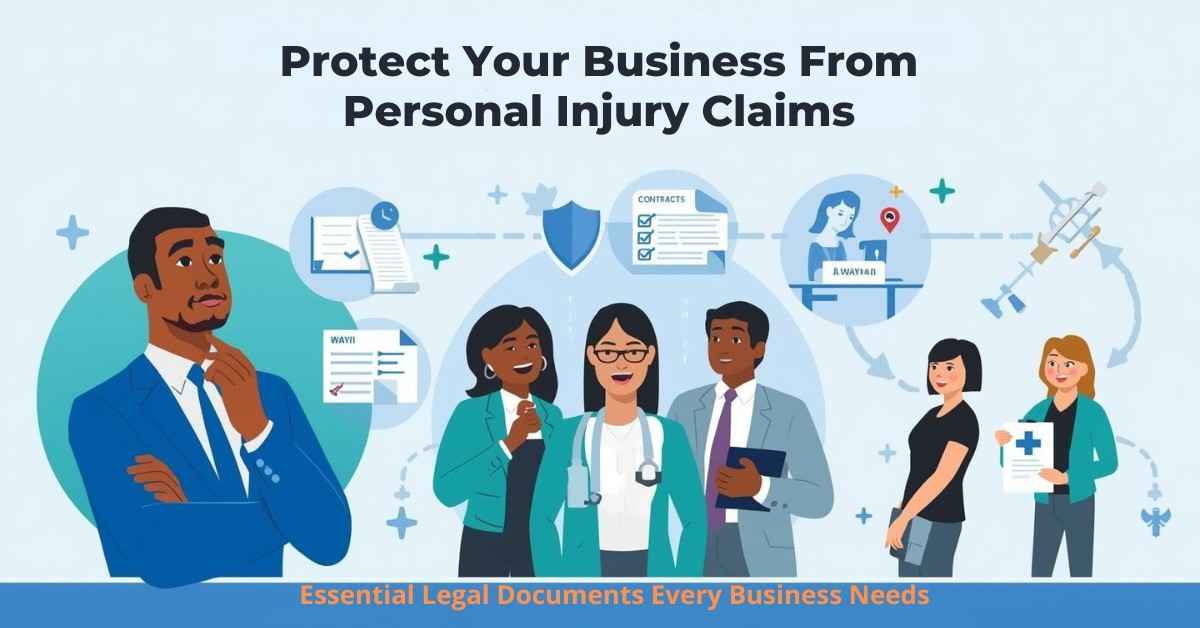
A customer slips and falls in your store, or an employee is injured while using equipment at work. Suddenly, your business faces a personal injury claim that could lead to expensive legal fees, fines, and damage to your reputation.
This is a situation no business owner wants to find themselves in, but it’s more common than you might think. In this article, we’ll explore the essential legal documents every business owner should have in place to protect themselves against such claims and ensure they are legally covered.
Business Insurance Policy
A well-structured business insurance policy is a fundamental component of any company’s risk management strategy. The right mix of policies ensures all potential risks are covered in personal injury cases. Here are the types of business insurance every owner should consider:
General Liability Insurance (GLI)
General liability insurance is a must-have for any business, especially for those operating in retail, hospitality, or service industries where customer interaction is frequent. This policy typically covers claims for bodily injury, property damage, and medical expenses if a customer is injured while on your business premises. For example, if a customer slips and falls in your store, GLI will help cover the costs of medical treatments and protect the business against lawsuits.
Workers’ Compensation Insurance
Workers’ compensation insurance is another essential policy that protects business owners and their employees in the event of workplace injuries, while obtaining workers’ compensation legal advice can help clarify rights and responsibilities when a claim becomes complex. While general liability covers public accidents, workers’ compensation insurance covers employees injured while performing work duties. This includes medical expenses, rehabilitation, and a portion of lost wages during the employee’s recovery. Employees undergoing this process should also understand their rights during treatment. For instance, can I change my workers’ compensation doctor is a common question injured workers ask when they’re unhappy with their assigned treating doctor, and the answer depends on the rules that apply in their jurisdiction.
Product Liability Insurance
Product liability insurance is particularly important for businesses that manufacture or sell physical products. This policy provides coverage for legal fees, damages, and medical costs if a product you sell causes injury to a customer. It can be through a defect or improper labeling.
Even if your business does not manufacture the products it sells, you may still be liable for defects that harm consumers, which makes product liability insurance a key part of your risk management.
Commercial Auto Insurance
If your business owns vehicles or if employees use their personal cars for business purposes (such as deliveries), you will need commercial auto insurance. This insurance provides coverage for accidents and injuries involving company-owned or company-used vehicles. Without it, your business could face significant financial liability if an employee causes a car accident during work hours or while performing job-related tasks. If an incident leads to an injury claim, understanding the potential cost of a car accident lawyer can help business owners plan for the legal and financial implications alongside their insurance coverage.
Professional Liability Insurance
Also known as errors and omissions (E&O) insurance, professional liability insurance is designed for service-based businesses such as consulting firms, medical professionals, or legal practitioners. This policy protects against claims that your professional services or advice caused injury, loss, or financial harm to a client.
Cyber Liability Insurance
Cyber liability insurance is essential for protecting your business against data theft or security breaches that could lead to personal injury claims. If a customer’s personal data is compromised due to inadequate security measures on your business’s website or server, you could face lawsuits or regulatory penalties.
This coverage typically includes the cost of legal defense, customer notification, credit monitoring, and any fines or penalties from regulatory authorities. Cyber insurance is becoming increasingly important as more businesses rely on online transactions and store sensitive customer data.
Employee Waivers and Release Forms
Employee waivers and release forms are legal documents that protect your business in case an employee is injured on the job. These forms clearly outline the risks associated with certain tasks or working conditions and require employees to acknowledge them before they begin.
By having employees sign waivers, you help minimize the chance of future lawsuits related to workplace injuries. These documents also clarify employee rights and responsibilities, ensuring everyone is on the same page about the procedures for reporting injuries or accidents.
Health and Safety Policies
Creating clear health and safety policies is essential for minimizing the risk of workplace accidents and injuries. These policies outline the specific steps employees must take to stay safe, including proper equipment use, adherence to safety procedures, and emergency protocols. Providing appropriate PPE gear for trades is essential to safeguard employees in high-risk environments. Ensuring that workers are equipped with the right personal protective equipment (PPE) helps prevent accidents and ensures compliance with safety regulations. You reduce the likelihood of accidents by establishing a safe work environment.
It’s also crucial for businesses to comply with local laws and regulations to avoid potential legal issues. Businesses can seek legal advice to ensure policies are up to date and legally sound. You can visit this website if you need more information on how personal injury lawyers assist victims in obtaining compensation.
Incident Report Forms
Incident report forms are essential tools for documenting accidents or injuries that occur in the workplace. Timely and detailed reporting helps create a clear record of events, which can be invaluable in defending your business against personal injury claims. These forms also serve as an official account of the incident, which can assist in investigations, insurance claims, or any potential legal proceedings.
Contracts and Service Agreements
Well-drafted contracts and service agreements are vital for protecting your business against personal injury claims from clients, vendors, or contractors. Including liability clauses in these documents ensures that each party is clear about their responsibilities and potential risks.
These agreements help establish boundaries and reduce the likelihood of disputes or legal action. It’s also important to regularly review and update contracts to ensure they remain in line with current laws and regulations.
Risk Assessment and Regular Audits
As we’ve discussed, having the right insurance and legal documents is critical for protecting your business from personal injury claims. However, one of the best ways to prevent accidents and minimize risk is through regular risk assessments and safety audits.
A risk assessment helps identify potential hazards and allows you to take steps to reduce them. Safety audits, on the other hand, review whether your safety procedures are being followed and whether they meet legal standards. Regularly checking these areas ensures a safer workplace and helps avoid costly injury claims.
Endnote
Ensuring your business is prepared for personal injury claims requires proper documentation and ongoing attention to detail. By consulting with legal professionals and staying informed about your legal protections, you can help safeguard your business against potential claims and ensure compliance with relevant laws.
“This content is for informational purposes only and does not constitute legal, tax, or financial advice. For advice specific to your situation, consult a qualified US attorney or CPA.”
File Your LLC Today
25$ off with a coupon
Lock in EasyFiling's transparent rates and get lifetime compliance support at no extra cost.
Get Started Now
Swostika Silwal